Custom patches have become one of the most popular ways to personalize hats, offering a premium look that combines durability with endless design possibilities. Whether you’re creating branded merchandise, sports team headwear, or retail collections, learning how to make custom patches for hats helps you produce designs that stand out without relying solely on direct embroidery.
From choosing the right patch material to selecting the best attachment method, every step influences the final result. This guide covers everything you need to know about designing custom patches for hats, along with practical tips for creating professional-quality headwear.
How Custom Patches Enhance Hat Decoration
Custom patches have transformed the way brands and individuals decorate hats. Instead of stitching a design directly onto the fabric, patches provide a versatile decoration option that adds texture, depth, and a premium finish. Whether you’re creating promotional merchandise, fashion collections, or team apparel, custom patches for hats offer greater creative freedom while maintaining durability.
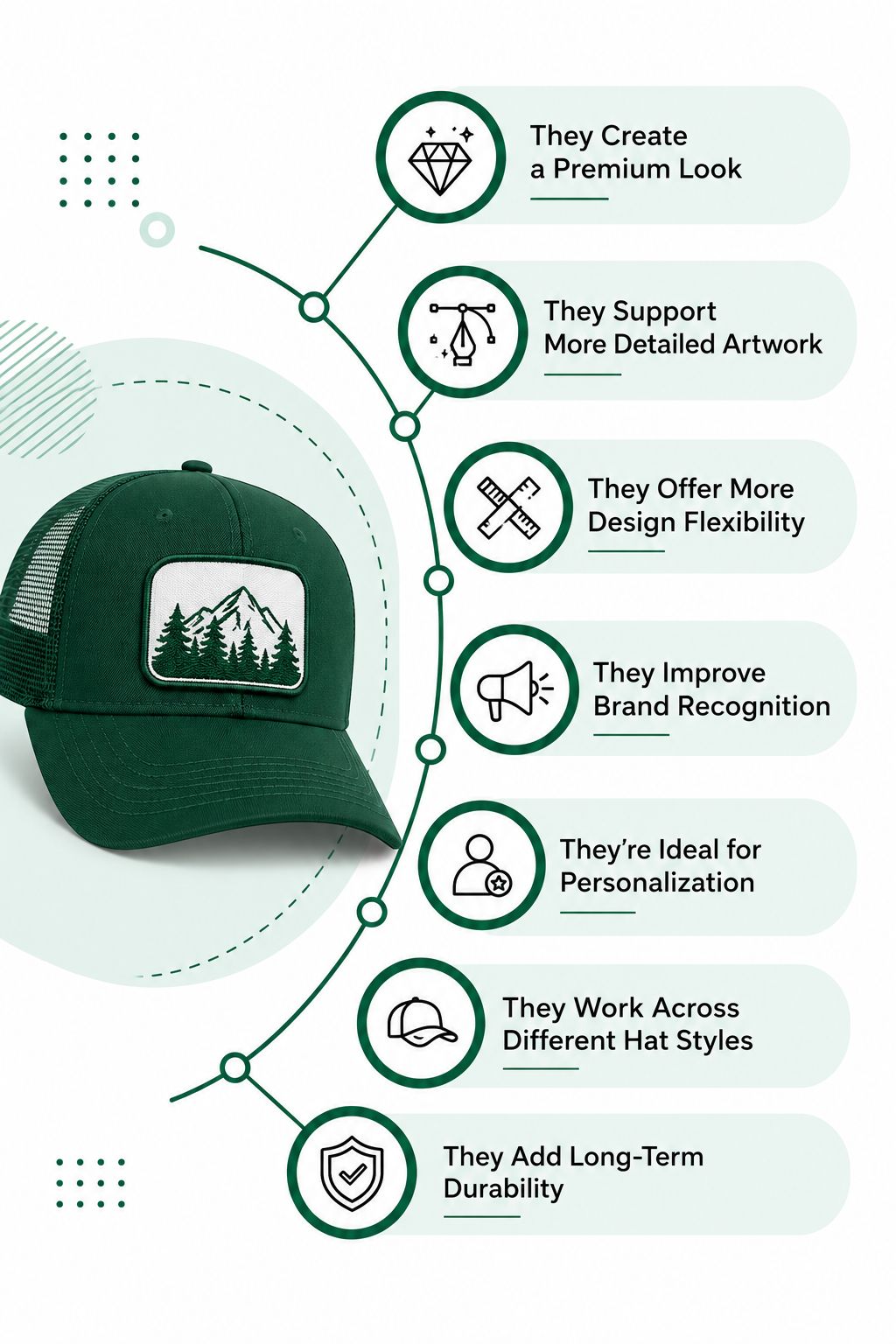
They Create a Premium Look
One of the biggest advantages of patches is their ability to elevate the overall appearance of a hat.
Unlike standard embroidery, patches add an extra layer of dimension that immediately catches attention. Leather, woven, embroidered, PVC, and chenille patches all create unique visual effects that make hats look more refined and retail-ready.
This is why many premium lifestyle and outdoor brands choose patches for their signature collections.
They Support More Detailed Artwork
Direct embroidery has limitations when it comes to fine details and intricate graphics.
Custom patches can reproduce:
- Detailed illustrations
- Thin outlines
- Complex typography
- Small design elements
- Multi-color artwork
This makes them ideal for logos that would otherwise need to be simplified for embroidery.
They Offer More Design Flexibility
When it comes to headwear customization, patches provide significantly more creative possibilities than traditional decoration methods.
You can choose from a variety of materials, including:
- Embroidered patches
- Woven patches
- Leather patches
- PVC rubber patches
- Printed patches
- Chenille patches
Each material creates a completely different style, allowing brands to match the patch with their overall identity.
They Improve Brand Recognition
A well-designed patch immediately stands out against the hat’s fabric.
Raised borders, textured stitching, and premium materials naturally attract attention, making logos easier to notice and remember.
For businesses producing branded merchandise, custom patches for hats help create stronger visual recognition while giving products a higher perceived value.
They’re Ideal for Personalization
Patches also make it easier to create personalized patches for hats for different audiences.
Popular personalization options include:
- Employee names
- Team logos
- Military units
- Motorcycle clubs
- School organizations
- Event merchandise
- Limited-edition collections
Because the patch is created separately before being attached to the hat, every design can be customized without significantly changing the production process.
They Work Across Different Hat Styles
Custom patches aren’t limited to one type of headwear.
They look excellent on:
- Baseball caps
- Snapbacks
- Dad hats
- Trucker hats
- Beanies
- Bucket hats
This consistency allows businesses to maintain the same branding across multiple product lines while adapting the decoration to each hat style.
They Add Long-Term Durability
Quality patches are designed to withstand frequent wear, outdoor conditions, and repeated washing. When properly attached, they maintain their appearance for years, making them an excellent choice for workwear, uniforms, promotional merchandise, and retail apparel.
From premium branding to creative headwear customization, patches offer a stylish and highly functional decoration solution. Whether you’re producing corporate merchandise or designing fashion-forward accessories, personalized patches for hats provide the flexibility, durability, and visual impact needed to make your hats stand out.
Types of Custom Patches for Hats
Choosing the right patch material is just as important as choosing the artwork itself. Different patch styles create different visual effects, offer varying levels of durability, and complement different hat designs. Understanding the best materials for hat patches helps you create products that match your brand identity while ensuring long-lasting performance.
Embroidered Patches
Embroidered patches are the most popular choice for custom patches for hats because they deliver a classic, textured appearance.
These patches feature raised thread stitched over a fabric backing, making them ideal for:
- Corporate logos
- Sports teams
- School apparel
- Uniforms
- Promotional merchandise
Their timeless look works exceptionally well on structured caps and outdoor headwear.
Woven Patches
Unlike embroidered patches, woven patches use finer threads to reproduce intricate artwork.
They’re an excellent option when your design includes:
- Small lettering
- Fine outlines
- Detailed graphics
- Complex logos
Because they don’t rely on raised stitching, woven patches can preserve detail that traditional embroidery may lose.
Leather Patches
Leather patches have become a favorite for premium lifestyle brands. Available in genuine leather and high-quality faux leather, they create a sophisticated appearance that pairs perfectly with outdoor and fashion collections.
Leather patches look particularly striking on:
They also age beautifully, developing additional character over time.
PVC Rubber Patches
PVC patches offer a modern, three-dimensional look with exceptional durability.
They resist:
- Water
- Dirt
- UV exposure
- Abrasion
This makes them popular for tactical gear, outdoor brands, adventure companies, and athletic merchandise.
The molded rubber construction also allows for vibrant colors and bold raised designs.
Chenille Patches
Chenille patches are instantly recognizable thanks to their soft, fuzzy texture.
Traditionally associated with varsity jackets, they’re now widely used for personalized patches for hats because they create a nostalgic, premium aesthetic.
They’re perfect for:
- College apparel
- Team merchandise
- Streetwear brands
- Fashion collections
Printed Patches
Printed patches allow highly detailed artwork, gradients, and full-color graphics that embroidery cannot easily reproduce.
If your design includes:
- Photographic elements
- Multiple color transitions
- Detailed illustrations
Printed patches may be the best solution while still providing the look of a sewn-on emblem.
Which Patch Material Works Best?
The right material depends on your branding goals.
| Patch Type |
Best For |
Appearance |
| Embroidered |
Corporate logos, uniforms |
Classic, textured |
| Woven |
Fine details, small text |
Smooth and detailed |
| Leather |
Premium brands, outdoor apparel |
Rustic and sophisticated |
| PVC |
Sports, tactical, outdoor gear |
Modern and durable |
| Chenille |
Fashion, varsity collections |
Soft and vintage |
| Printed |
Full-color artwork |
Highly detailed |
Many businesses combine different patch styles across product lines to create variety while maintaining consistent branding.
For example, a leather patch may work well on a winter beanie, while embroidered patches pair naturally with baseball caps for corporate merchandise. Meanwhile, woven patches are an excellent option for fashion-focused dad caps where intricate logos need to remain sharp and readable.
Ultimately, selecting the best materials for hat patches ensures your custom hat patches not only enhance the appearance of your headwear but also reinforce your brand with durability, quality, and professional craftsmanship.
How to Create Custom Patches for Hats
Designing custom patches for hats is easier than ever, thanks to modern production methods and online customization tools. Whether you’re creating branded merchandise, promotional giveaways, or personalized headwear, following a structured process helps ensure your patches look professional and last for years. Here’s a step-by-step guide on how to make custom patches for hats.
Step 1: Define Your Design Purpose
Before creating the artwork, decide what you want your patch to communicate.
Ask yourself:
- Is it for business branding?
- A sports team or club?
- Fashion or streetwear?
- Corporate uniforms?
- A personal project or gift?
Your goal will influence the patch style, size, colors, and placement on the hat.
Step 2: Choose the Best Patch Material
One of the most important decisions is selecting the best materials for hat patches.
Popular options include:
- Embroidered patches for a classic textured appearance
- Woven patches for detailed logos and small text
- Leather patches for premium lifestyle brands
- PVC patches for outdoor and tactical applications
- Printed patches for full-color graphics
- Chenille patches for varsity and fashion-inspired designs
Choose a material that complements your brand while matching the intended use of the hat.
Step 3: Create an Embroidery-Friendly Design
Learning how to design hat patches starts with keeping the artwork simple and scalable.
For the best results:
- Use bold lines instead of thin outlines.
- Keep text short and easy to read.
- Avoid gradients if choosing embroidery.
- Simplify intricate details.
- Maintain strong contrast between colors.
High-resolution vector files (AI, EPS, SVG, or PDF) are ideal because they preserve artwork quality during production.
Step 4: Select the Right Shape and Size
The patch shape should complement both your artwork and the style of the hat.
Common patch shapes include:
- Circle
- Rectangle
- Square
- Oval
- Shield
- Custom die-cut shapes
The patch should be large enough to remain readable but small enough to fit comfortably on the front, side, or back of the hat without overwhelming the design.
Step 5: Decide How the Patch Will Be Attached
There are several attachment methods available for custom patches for hats.
The most common options are:
- Heat-press adhesive backing
- Sew-on patches
- Velcro backing
- Peel-and-stick temporary backing
For baseball caps and structured hats, sewing generally provides the strongest and most durable attachment.
Step 6: Order a Sample First
Before producing a large batch, always request a sample.
A sample allows you to verify:
- Stitch quality
- Color accuracy
- Patch size
- Border finish
- Overall appearance on the hat
Making adjustments before bulk production helps avoid costly mistakes.
Step 7: Scale Production
Once you’re satisfied with the sample, move on to full production.
If you’re creating patches for:
- Corporate merchandise
- Retail collections
- Team uniforms
- Promotional events
Ordering in larger quantities often reduces the cost per unit while ensuring consistent quality across every patch.
Step 8: Care for Your Hat Patches
Proper care helps maintain the appearance of your custom patches.
To maximize durability:
- Spot clean whenever possible.
- Wash hats gently if required.
- Avoid excessive heat during drying.
- Store hats in a cool, dry place.
- Do not aggressively scrub embroidered areas.
Following these care practices keeps patches looking sharp even after repeated wear.
Creating custom patches for hats doesn’t require complicated equipment—it requires thoughtful planning. From selecting the best materials for hat patches to understanding how to design hat patches that stitch cleanly, each step contributes to a finished product that reflects your brand professionally.
By starting with quality artwork, choosing the right material, testing a sample, and using the appropriate attachment method, you can confidently produce custom hat patches that stand out for both style and durability.
Alternative Ways to Create Custom Hat Patches
While embroidered patches remain the most popular choice, they’re not the only option for creating eye-catching hat designs. Depending on your brand style, budget, and artwork, you can explore several alternative patch-making techniques.
Woven Patches
Woven patches use finer threads than traditional embroidery, making them ideal for logos with intricate details, thin lettering, or complex illustrations. They offer a smooth finish while preserving sharp artwork.
Leather and Faux Leather Patches
Leather patches are perfect for premium and outdoor-inspired brands. They provide a clean, sophisticated appearance and pair exceptionally well with baseball caps, trucker hats, and beanies. Faux leather offers a similar aesthetic at a lower cost.
PVC Rubber Patches
For sports, tactical, or adventure brands, PVC patches provide a modern three-dimensional look. They’re waterproof, weather-resistant, and highly durable, making them suitable for hats worn in demanding environments.
Printed Patches
If your design includes gradients, photographic elements, or multiple colors, printed patches are an excellent alternative. They reproduce detailed artwork more accurately than embroidery while maintaining a lightweight profile.
Chenille Patches
Known for their soft, fuzzy texture, chenille patches bring a classic varsity style to custom hats. They’re popular for fashion brands, schools, sports teams, and limited-edition collections that want a bold, retro-inspired look.
By choosing the right patch style, you can create custom hats that align with your brand identity while offering customers a unique and memorable finished product.
In a Nutshell
Creating custom patches for hats is an excellent way to elevate your headwear with distinctive branding, premium craftsmanship, and long-lasting durability. From selecting the right patch material and designing embroidery-friendly artwork to choosing the ideal attachment method, every step contributes to a professional final product.
Whether you’re producing hats for a business, sports team, promotional campaign, or retail collection, well-made patches add character and enhance brand recognition. By focusing on quality materials, thoughtful design, and proper application, you can create custom hat patches that leave a lasting impression and transform ordinary hats into memorable, high-value products.
Frequently Asked Questions
1. What is the best type of custom patch for baseball caps?
The best patch depends on your design and intended use. Embroidered patches are ideal for classic logos, woven patches work well for detailed artwork, leather patches create a premium look, and PVC patches are excellent for outdoor or sports applications. Choosing the right material ensures both durability and visual appeal.
2. Can custom patches be attached to any type of hat?
Yes. Custom patches can be applied to most hat styles, including baseball caps, trucker hats, dad hats, snapbacks, beanies, and bucket hats. However, the attachment method and patch size should be adjusted based on the hat’s material, structure, and available decoration area.
3. What file format should I use for designing custom hat patches?
Vector files such as AI, EPS, SVG, or PDF are recommended because they maintain sharp lines and can be resized without losing quality. If a vector file isn’t available, use a high-resolution PNG with a transparent background whenever possible.
4. How large should a custom patch be for the front of a baseball cap?
Most front patches range between 2.5 and 3.5 inches wide and 1.5 to 2.25 inches tall
. The ideal size depends on the cap profile and the complexity of your design, ensuring the patch remains balanced without overwhelming the hat.
5. Are embroidered patches more durable than printed patches?
Both are durable when produced professionally, but embroidered patches generally offer greater resistance to wear, washing, and outdoor use. Printed patches are better suited for highly detailed, full-color artwork that embroidery cannot accurately reproduce.
6. Can I order a single custom patch for a hat?
Many manufacturers offer no minimum order quantity, allowing you to create a single custom patch for prototypes, personal projects, or sample evaluation before placing larger production orders.
7. How long does it take to produce custom patches for hats?
Production times vary depending on the patch type, order size, and customization requirements. Most standard orders are completed within 7–14 business days
, while larger or highly customized orders may require additional production time.
8. What makes a logo embroidery-ready for custom hat patches?
An embroidery-ready logo uses bold lines, readable text, solid colors, and minimal fine details. Simplifying intricate artwork helps ensure clean stitching and improves the overall appearance of the finished patch.
9. Which businesses benefit most from custom patches for hats?
Custom hat patches are widely used by apparel brands, construction companies, breweries, sports teams, outdoor brands, schools, restaurants, automotive businesses, nonprofit organizations, and corporate marketing teams looking to create memorable branded headwear.
10. Are custom hat patches suitable for promotional merchandise?
Absolutely. Custom patches add a premium feel to promotional hats, making them more likely to be worn repeatedly. This increases long-term brand visibility compared to standard printed promotional products, making patches an effective marketing investment.